一、The core requirements of machine vision for data transmission
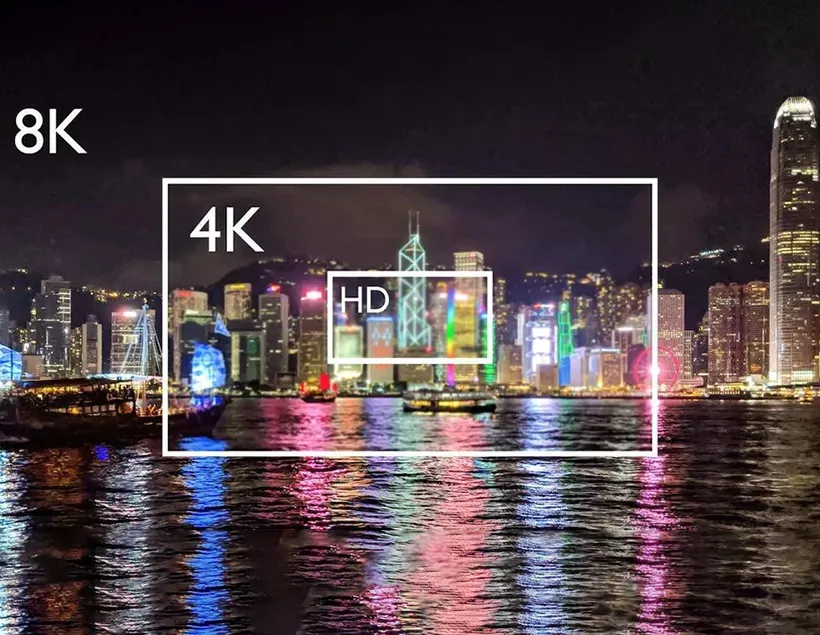
In machine vision systems, industrial cameras are required to transmit high-resolution, high-frame-rate image data in real time to industrial computers or processing units.
These requirements place extremely high demands on the transmission links:
- High bandwidth: The amount of data generated by 4K/8K images with high frame rates is enormous.
- Low latency: Real-time detection, positioning, and sorting processes must not experience any significant delays.
- Long distances: The distances between production lines, storage areas, and testing equipment often exceed 10 meters, or even 50 meters.
- Strong resistance to interference: Industrial environments are filled with numerous sources of electromagnetic interference.
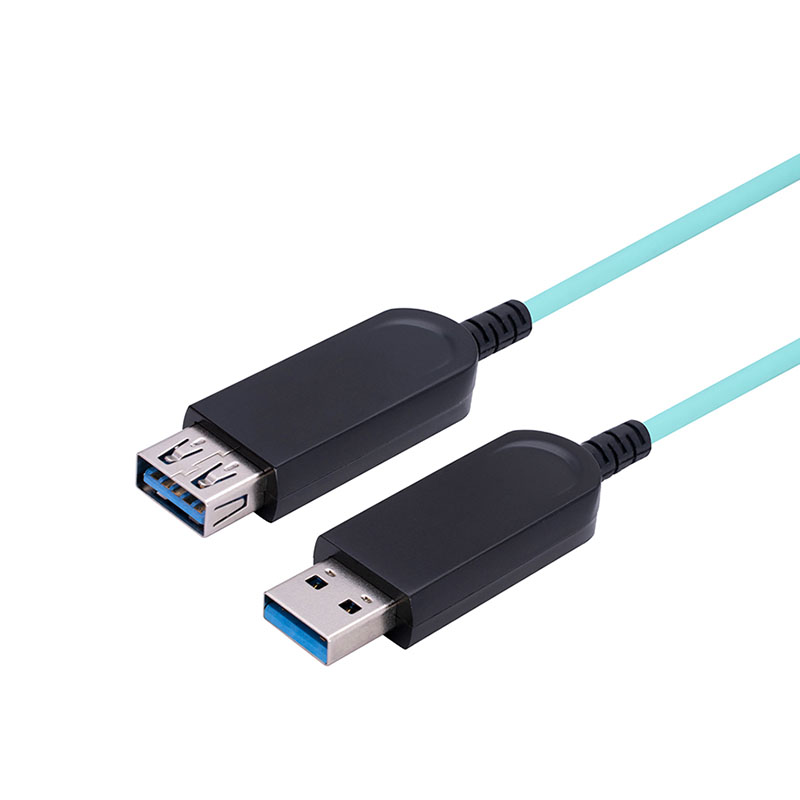
Under these conditions, traditional USB copper cables gradually become inadequate, which is precisely the reason why Active Optical Cable (USB AOC) has seen such rapid adoption in the field of machine vision.
二、Typical application scenarios of USB AOC in machine vision
- Connection of high-resolution industrial cameras
In the context of USB3.2/USB4 industrial camera applications, USB AOC can stably support the following:
- High-speed image acquisition
- Uncompressed data transmission
- Long-distance deployment (up to 20m/30m/50m or more)
It is widely used in: - Semiconductor inspection
- Panel testing
- PCB AOI inspection
- Precision dimension measurement
- Complex production lines and distributed systems
In automated production lines, cameras and control cabinets are often located in different areas.
USB AOC cameras feature low weight, high flexibility, and ease of wiring, making them ideal for:
- Multi-camera synchronization systems
- Mobile platforms/mechanical arms
- Track inspection equipment
- Industrial environments with strong electromagnetic interference
Since the fiber optic components do not conduct electricity and are not affected by EMI, USB AOC offers significant advantages in the following environments:
- Welding workshops
- Areas near high-power motors
- Surrounding high-voltage equipment
三、Potential Risks of USB AOC in Machine Vision
Despite the obvious advantages of USB AOC, the following risks still need to be considered in practical applications:
- Compatibility risks
- Inconsistent latency
- Incomplete link reset
- Slow wake-up from power-saving mode
四、When is it not recommended to use a USB AOC?
Strong synchronization across multiple cameras
Industrial environments with high levels of EMI
Extreme sensitivity to real-time performance
Scenario 1: High-speed shooting combined with online sorting – requirements for conveyor belt speed control
Scenario 2: Vision-guided robotic arms
Scenario 3: Strict time alignment of multiple cameras (synchronization within the microsecond range) – Requirement for synchronization accuracy: <1μs (for Olympic live broadcasts)
Scenario 4: Vision systems combined with real-time safety mechanisms – Delays are not just a performance issue, but also a safety concern.