
As industrial automation continues to evolve rapidly, robotic arms are carrying heavier payloads and executing increasingly complex motion paths. However, while pursuing higher productivity and performance, one hidden bottleneck is often overlooked—the cable management system inside the robot itself.
Traditional robotic wiring harnesses typically adopt an integrated design, combining power, data, and control lines into a single thick cable assembly. While this approach may work adequately in static or low-motion environments, it reveals significant limitations in modern robotic applications involving multiple joints and frequent twisting motions.
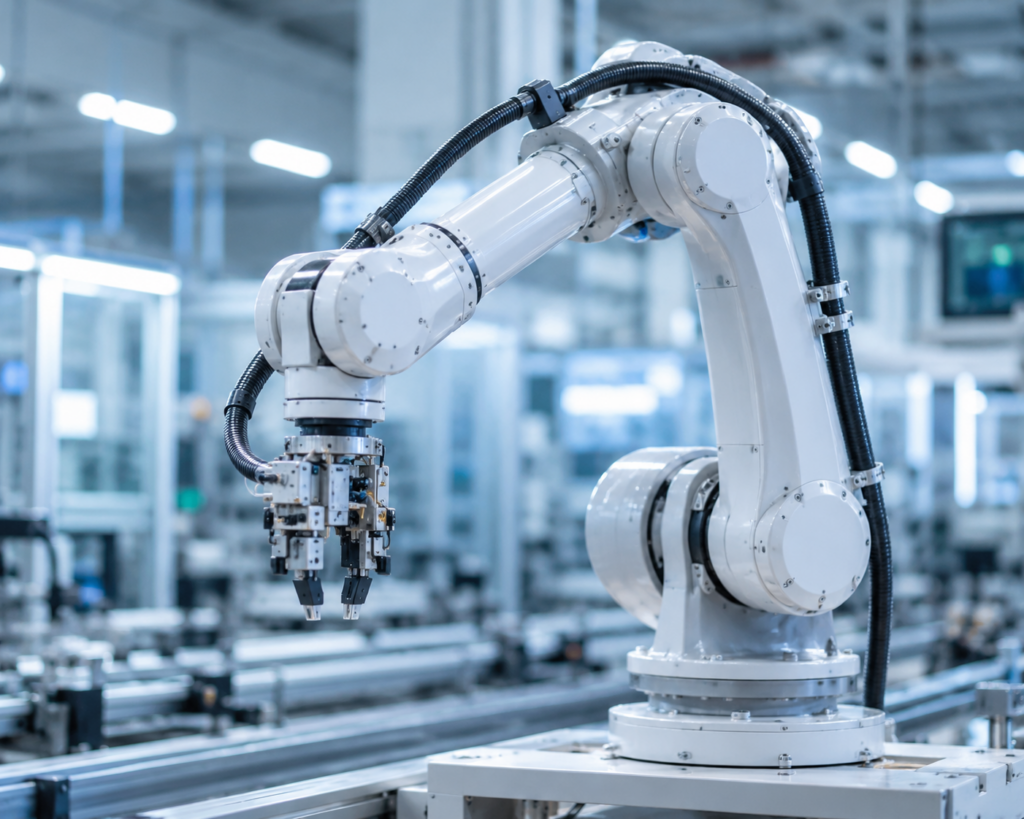
Industry Pain Point: The Cost of Rigid Cable Assemblies
In a project with a robotic arm manufacturer, we encountered a classic “cable deadlock” challenge:
Difficult Routing
Space inside robotic bases and joints is extremely limited. Thick and rigid composite cables struggle to pass through narrow channels and complex pathways. This not only increases assembly difficulty but can also cause hidden damage during installation.
Single Point of Failure Risk
Power cables (copper conductors), due to high current loads and constant mechanical stress, are often the weakest link in the entire cable assembly. Once the power cable fails because of fatigue, the integrated structure often requires replacing the entire cable harness, resulting in significant material waste and cost.
High Downtime Costs
Replacing an entire cable assembly involves not only expensive spare parts but also extended downtime. In automated production lines, every minute of downtime directly impacts productivity and revenue.

Engineering-Level Solution: Functional Separation with AOC Technology
To address these challenges, we did not simply focus on creating a more durable cable. Instead, we redesigned the entire connection architecture by introducing AOC (Active Optical Cable) technology and implementing a functionally separated design.
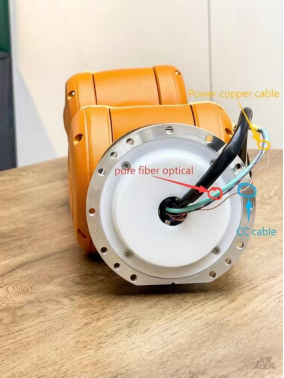
Power Transmission (Heavy-Duty Copper Cable)
Dedicated exclusively to high-current transmission using highly flexible specialty copper materials optimized for durability and resistance to mechanical fatigue.
Data Communication (AOC Active Optical Cable)
This is the core upgrade of the solution. By replacing electrical signals with optical transmission, AOC cables provide an extremely small diameter, lightweight
construction, and natural immunity to electromagnetic interference (EMI). Even inside confined cable sleeves or routing channels, signal integrity and transmission reliability can be maintained.
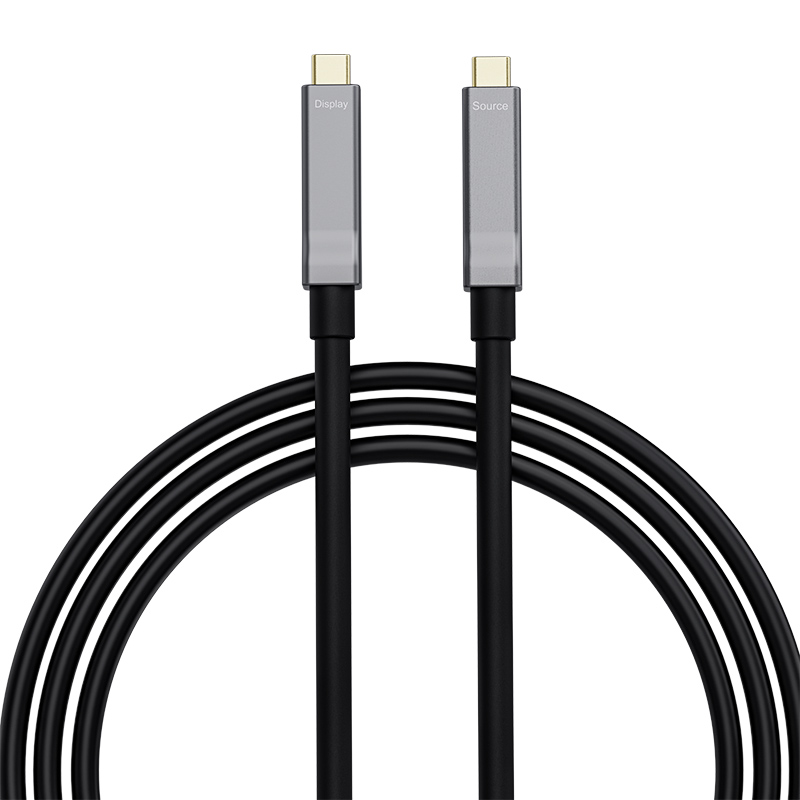
In fact, AOC technology has already been widely adopted in high-speed video and data transmission applications. For example, active displayport cable solutions integrate optical-electrical conversion technology to enable long-distance, high-bandwidth, and low-loss connectivity. This same technological approach is now extending beyond display applications into robotics and industrial automation, delivering lighter, more stable, and higher-performance connectivity for complex motion systems.
Control Signals (USB-C/CC Logic Cable)
Dedicated to handling device handshake protocols and logic control functions, ensuring stable communication between components.
Drag Chain-Rated Flex Design
Specifically optimized for dynamic applications and tested for more than 5 million bending cycles, making it ideal for continuous high-frequency robotic movement.
Solution Advantages Comparison
| Category | Traditional Integrated Cable | SavLink AOC Separated Solution |
| Routing Experience | Thick, rigid, difficult to install | Slim, flexible, easily routed through complex paths |
| Maintenance Strategy | Entire cable replacement required if power line fails | Replace only damaged components |
| EMI Resistance | Susceptible to servo motor interference | Optical transmission provides complete EMI immunity |
| Maintenance Time | Long (rewiring, connector rebuilding, recalibration) | Short (modular plug-and-play replacement) |
Conclusion
As robots continue to become more intelligent and capable, the demands for bandwidth, interference resistance, and flexibility within internal connection systems will continue to increase. A hybrid AOC connectivity architecture not only solves physical cable routing challenges but also significantly reduces total cost of ownership (TCO) through a “divide-and-optimize” strategy.
We specialize in customized high-flex cables designed specifically for robotic applications. If you are seeking solutions for ultra-small cable diameters, millions of flex cycles, or extreme torsional environments, we welcome the opportunity to discuss your specific engineering requirements and help build more reliable robotic connectivity systems.