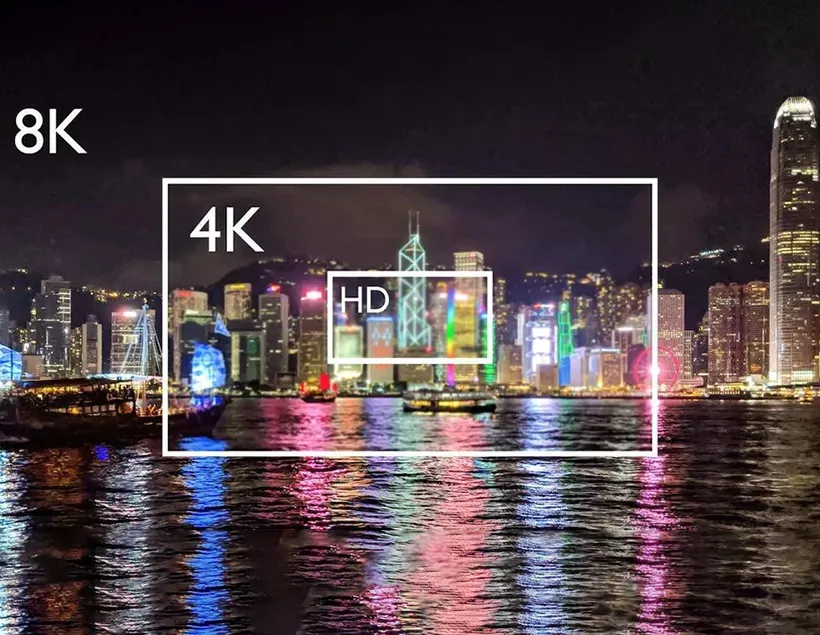
Why Choose a Cable HDMI to Mini DisplayPort for Cross-Device Compatibility
In today’s digital workspace, connecting different display standards is a common requirement. Many laptops, graphics cards, and media devices still rely on HDMI output, while older monitors, projectors, and certain professional displays use Mini DisplayPort. A cable HDMI to Mini DisplayPort provides a simple and efficient bridge between these two interfaces, allowing seamless video transmission without replacing existing equipment.
For businesses, educators, and AV professionals, this type of cable helps reduce upgrade costs while maintaining reliable performance. Instead of investing in new monitors or adapters, a well-designed conversion cable ensures stable connectivity and consistent image quality across devices.
Understanding How a Cable HDMI to Mini DisplayPort Works
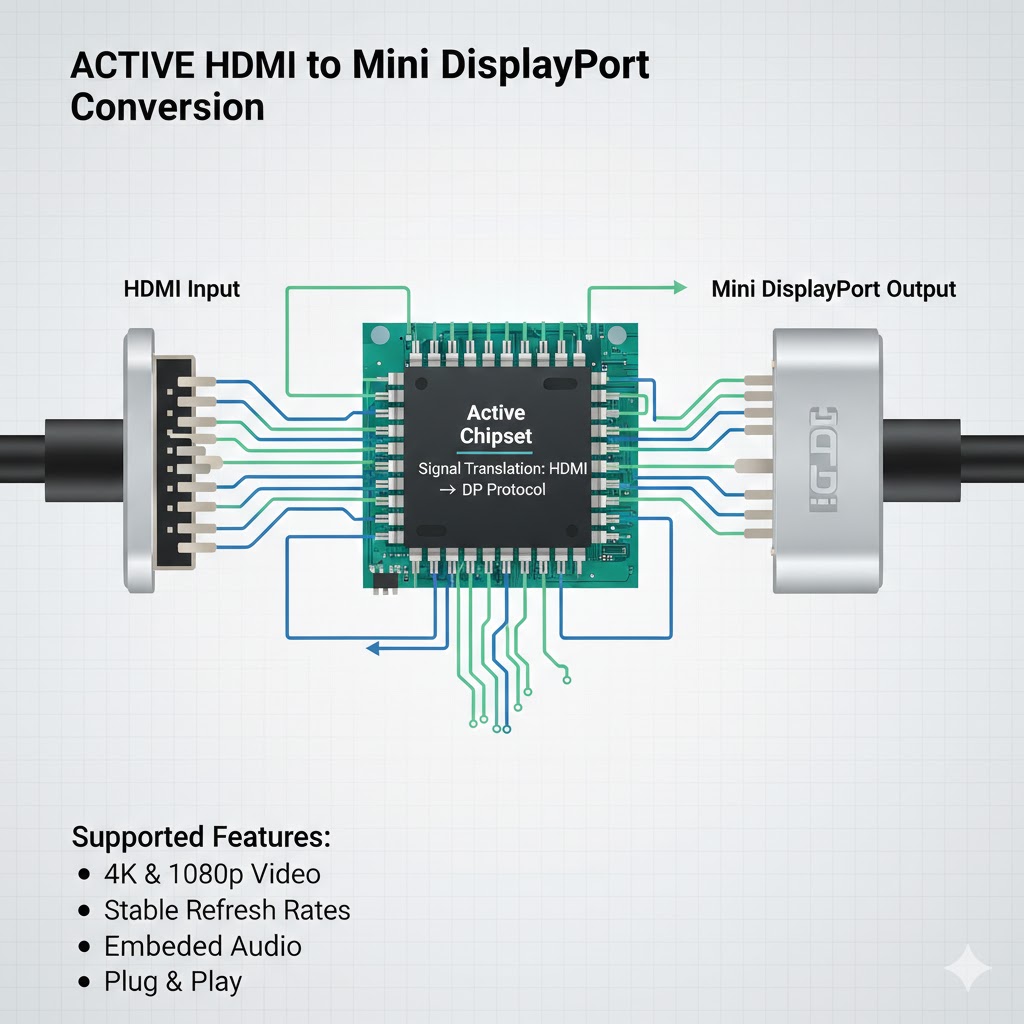
Unlike passive cables that only change connector shapes, most HDMI to Mini DisplayPort solutions require active signal conversion. HDMI and Mini DisplayPort use different signaling technologies, so an internal chipset translates the digital signal format in real time.
High-quality active cables typically support:
- Full HD 1080p and 4K video resolution
- Stable refresh rates for smooth visuals
- Embedded audio transmission
- Plug-and-play functionality without driver installation
This internal conversion ensures compatibility with a wide range of systems, including laptops, desktop PCs, gaming consoles, and media players.
Key Benefits of Using a Cable HDMI to Mini DisplayPort
1. Cost-Effective Display Expansion
A dedicated cable allows users to connect modern HDMI sources to existing Mini DisplayPort monitors. This extends the life of professional displays and reduces unnecessary hardware replacement.
2. Reliable Signal Transmission
Premium cables integrate shielding, gold-plated connectors, and high-grade chipsets to minimize signal loss and electromagnetic interference. This is especially important in offices, conference rooms, and industrial environments where stable video output is essential.
3. Compact and Easy Installation
Compared with bulky external converters, an integrated cable HDMI to Mini DisplayPort offers a cleaner installation. The single-cable design simplifies cable management and improves workspace organization.
4. Broad Application Scenarios
These cables are widely used in:
- Corporate meeting rooms and presentation systems
- Educational classrooms and lecture halls
- Digital signage and advertising displays
- Home entertainment and gaming setups
- Professional AV and control rooms
Their versatility makes them a practical accessory for both commercial and personal environments.
Important Factors When Selecting a Cable HDMI to Mini DisplayPort
Choosing the right cable ensures long-term reliability and optimal performance. Consider the following aspects:
Resolution Support
Verify that the cable supports the resolution you need, such as 1080p or 4K. Higher bandwidth ensures better future compatibility.
Cable Length
Signal stability decreases with excessive length. For longer distances, active optical or amplified solutions may be preferable.
Build Quality
Look for reinforced connectors, durable outer jackets, and strong strain relief. These features improve longevity in high-use environments.
Chipset Compatibility
A certified conversion chipset guarantees proper communication between HDMI sources and Mini DisplayPort displays, avoiding flickering or signal drop.
Compliance and Certification
Professional-grade products often meet CE, FCC, or RoHS standards, ensuring safety and electromagnetic compatibility.
Cable HDMI to Mini DisplayPort in Professional AV and Industrial Use

In professional AV integration, reliability is critical. Conference centers, broadcast studios, and control rooms often combine legacy and modern equipment. A dependable cable HDMI to Mini DisplayPort enables smooth system integration without complex converters.
Industrial environments also benefit from ruggedized cable designs featuring:
- Enhanced shielding against interference
- Temperature-resistant materials
- Secure connector structures
- Long operational lifespan
These characteristics help maintain uninterrupted visual communication in demanding conditions.
Future Trends in HDMI and DisplayPort Connectivity
Although USB-C and wireless display technologies are growing, HDMI and DisplayPort remain dominant in professional video transmission. Conversion cables will continue to play a key role in hybrid systems where multiple standards coexist.
Manufacturers are also improving:
- 4K and higher-resolution support
- Low-latency signal processing
- Slim and flexible cable structures
- Custom OEM/ODM design options
These advancements ensure that cable HDMI to Mini DisplayPort solutions remain relevant in evolving AV infrastructures.
Conclusion
A high-quality cable HDMI to Mini DisplayPort is an essential tool for bridging different display technologies. It delivers cost savings, reliable signal conversion, and flexible installation across business, education, industrial, and home environments.
By selecting a certified, well-engineered cable with appropriate resolution support and durable construction, users can achieve stable video performance and extend the usability of their existing display equipment. As connectivity standards continue to evolve, dependable conversion solutions will remain a practical and valuable component of modern digital systems.