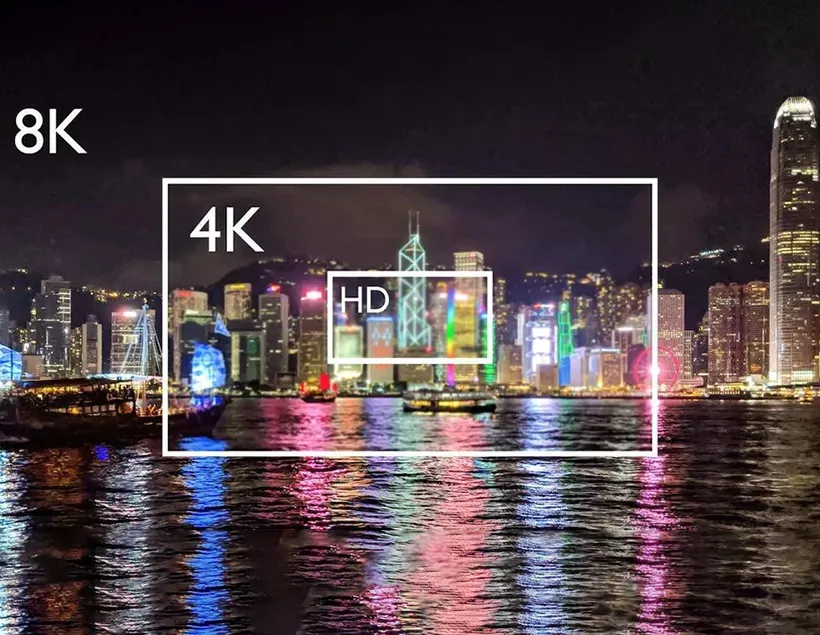
For modern PC gamers, visual quality and responsiveness are no longer optional—they are essential. As games push higher resolutions, faster refresh rates, and richer color depth, the connection between your graphics card and display plays a critical role. This is where DisplayPort (DP) stands out, especially when paired with a fiber optic DisplayPort 2.1 cable.
In this guide, we’ll explain why DisplayPort is the preferred interface for gamers, how it delivers superior image quality and speed, and how choosing the right cable can significantly improve your gaming experience.
Why DisplayPort Is the Best Choice for Gamers
DisplayPort was designed from the ground up for high-performance digital video transmission. Compared to older analog standards like VGA and even earlier digital interfaces such as DVI and HDMI, DisplayPort offers three major advantages that directly benefit gamers.
1. Maximum Image Quality and Visual Fidelity for Gaming
One of DisplayPort’s biggest strengths is its ability to deliver higher resolutions at higher refresh rates with minimal compression. This means sharper images, smoother motion, and more accurate colors—exactly what competitive and immersive gamers demand.
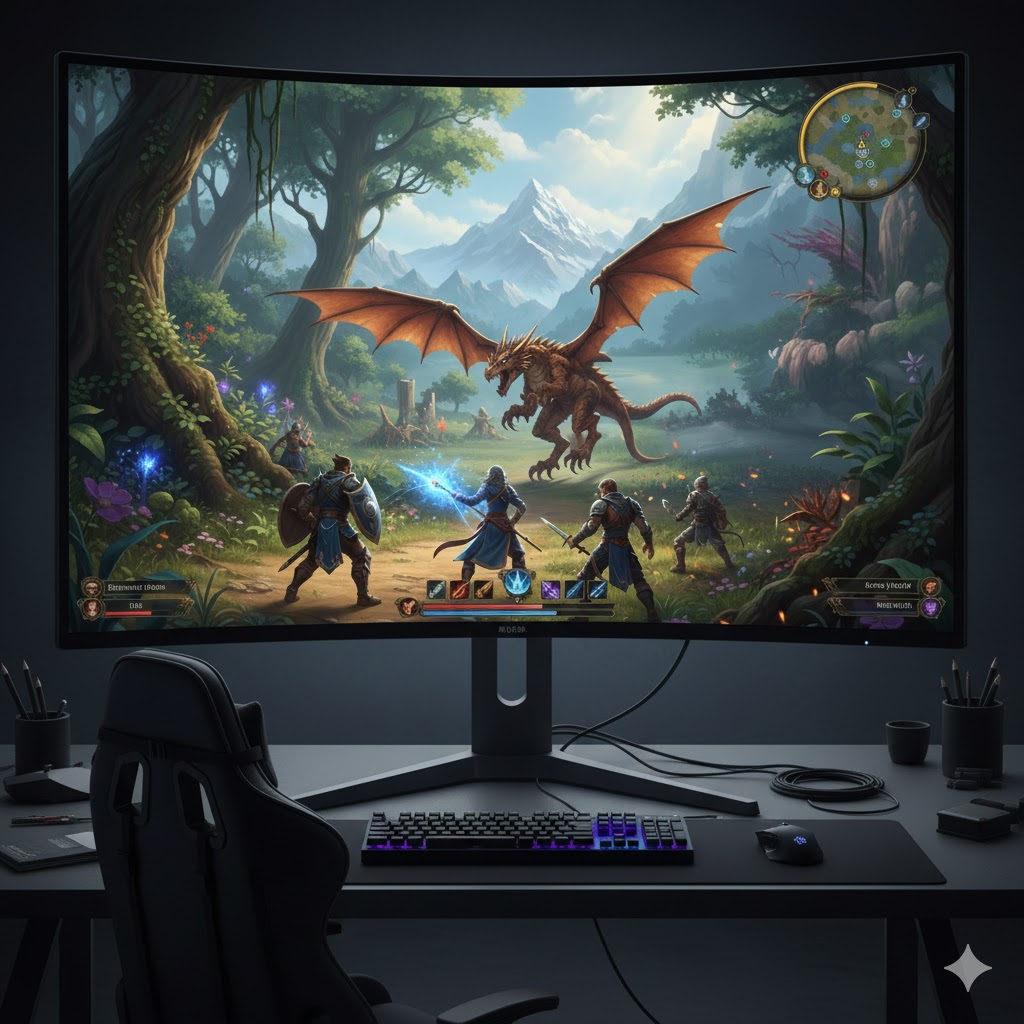
DisplayPort supports:
Ultra-high resolutions such as 4K, 5K, and 8K
Extremely high refresh rates (144Hz, 240Hz, and beyond)
Higher color depth and HDR with reduced visual artifacts
With a fiber optic DisplayPort 2.1 cable, signal integrity remains stable even at extreme bandwidth levels. Unlike copper cables, optical fibers are immune to electromagnetic interference, ensuring that every frame reaches your monitor exactly as your GPU outputs it. For fast-paced games, this translates into cleaner visuals and more precise on-screen detail.
Fiber Optic DisplayPort 2.1 Cable for Ultra-High Bandwidth Gaming
The DisplayPort 2.1 standard dramatically increases available bandwidth, making it ideal for next-generation gaming setups. A fiber optic DisplayPort 2.1 cable fully unlocks this potential.
2. Faster Data Transfer for Large Game Assets
Modern games rely on massive data streams—high-resolution textures, real-time lighting, and complex 3D environments. DisplayPort’s packet-based data transmission allows it to move large amounts of data more efficiently than legacy standards.
Fiber optic DP cables take this even further:
Support ultra-high data rates without signal loss
Maintain performance over longer distances
Reduce latency caused by retransmission or signal degradation
For gamers, this means faster frame delivery, smoother gameplay, and reduced lag when switching resolutions or using multiple high-refresh-rate monitors.
One Cable, Cleaner Desktop, Better Multi-Display Gaming
3. A Single Cable for Power, Video, and Audio
Another key advantage of DisplayPort is its ability to carry video, audio, and auxiliary data over a single cable. This simplifies cable management and creates a cleaner, more organized gaming setup.
Using a fiber optic DisplayPort 2.1 cable, gamers can:
Connect high-end GPUs to advanced monitors with one cable
Drive multiple displays using DisplayPort Multi-Stream Transport (MST)
Reduce clutter without sacrificing performance
For streamers and multi-monitor gamers, this single-cable solution keeps desks clean while supporting complex display configurations.
The Technology Behind DisplayPort’s Advantages
To understand why DisplayPort performs so well, it helps to look at its internal design.
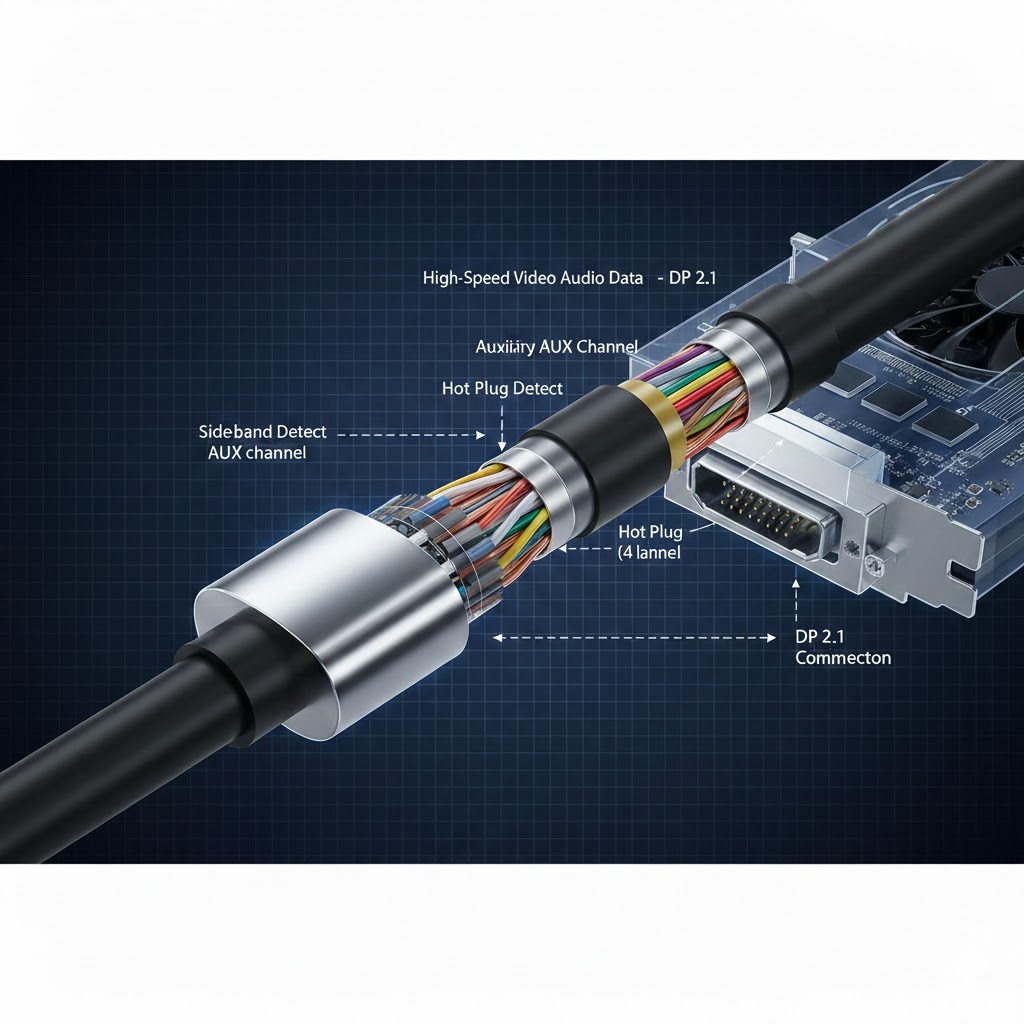
High-Speed Lanes and Packet-Based Transmission
DisplayPort uses multiple high-speed data lanes to transmit video and audio simultaneously. Instead of sending a continuous signal like analog interfaces, DP breaks data into packets. This allows:
Efficient bandwidth allocation
Dynamic adjustment to resolution and refresh rate
Lower error rates during transmission
Embedded Clock and Reduced Signal Noise
Unlike older standards that require a separate clock signal, DisplayPort embeds the clock within the data stream. This reduces jitter and improves timing accuracy—key factors for smooth gaming visuals.
When combined with optical fiber technology, a fiber optic DisplayPort 2.1 cable eliminates electrical noise entirely, ensuring consistent performance even in electrically noisy environments.
How Gamers Should Choose the Right DisplayPort Cable
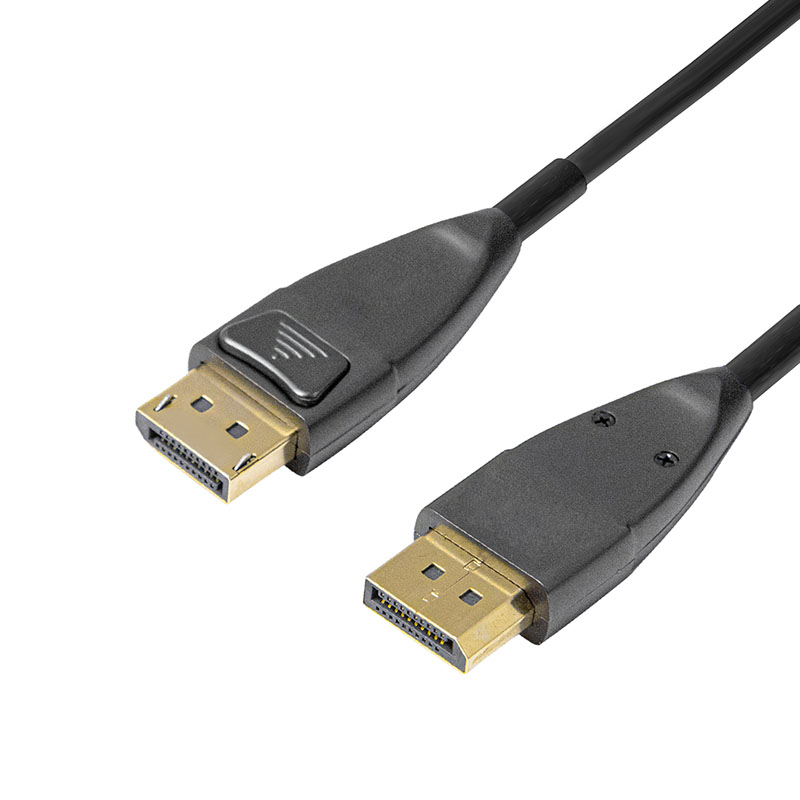
When selecting a DisplayPort cable for gaming, consider the following:
DP version: Choose DisplayPort 2.1 to future-proof your setup
Cable type: Fiber optic cables offer superior bandwidth and stability
Length: Optical cables maintain performance over longer distances
Compatibility: Ensure your GPU and monitor support DP 2.1 features
Investing in a high-quality fiber optic DisplayPort 2.1 cable ensures your hardware performs at its maximum potential.
Conclusion: Upgrade Your Gaming Experience with DisplayPort 2.1
For gamers seeking the highest image quality, fastest response times, and a clean desktop setup, DisplayPort is the clear winner. Its ability to deliver uncompressed visuals, high-speed data transfer, and single-cable convenience makes it ideal for modern gaming systems.
Paired with a fiber optic DisplayPort 2.1 cable, DisplayPort becomes a future-ready solution—capable of supporting the most demanding games, displays, and multi-monitor setups for years to come.